Dec 23, 2025 · 3 min read
Activity Tracking Using Video Analytics: How Lightweight Vision AI Models Are Transforming Industrial Monitoring
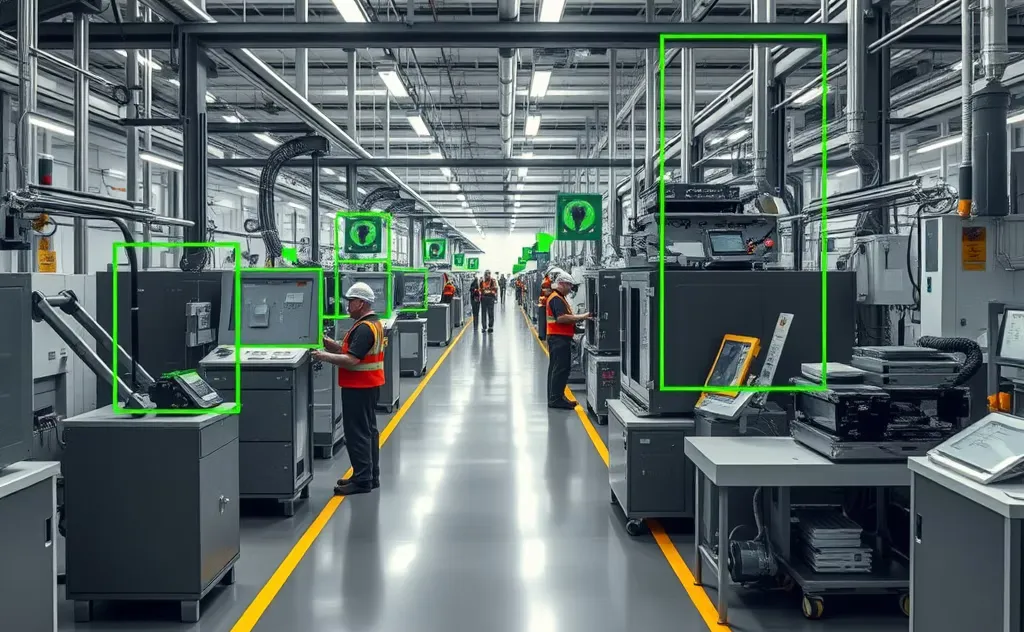
From Passive CCTV to Active Intelligence
For decades, CCTV cameras have been installed across factories, warehouses, offices, utilities, and public infrastructure - primarily for surveillance and post-incident review. However, most video data remains underutilized.
With advancements in video analytics and lightweight Vision AI models, enterprises can now transform existing camera feeds into continuous sources of operational intelligence - without replacing infrastructure or deploying expensive hardware. Activity tracking is at the center of this shift.
What Is Activity Tracking in Video Analytics?
Activity tracking refers to the automated detection, classification, and analysis of human or object movement and actions within a video stream. Unlike traditional motion detection, modern Vision AI systems understand what is happening, not just that something moved.
Typical activities tracked include:
- Human movement and dwell time
- Task execution and sequence adherence
- Equipment usage and idle time
- Unsafe or non-compliant actions
- Zone entry, exit, and congestion patterns
The result is structured data extracted from unstructured video - delivered in real time or as actionable reports.
Why Lightweight Vision AI Models Matter
Many early video analytics systems relied on large, compute-heavy deep learning models that required GPUs, cloud processing, and high bandwidth. These approaches often fail in real-world enterprise environments due to cost, latency, and data security concerns.
Lightweight Vision AI models are designed differently:
- Optimized CNNs and task-specific models
- Edge or near-edge deployment capability
- Lower compute and power requirements
- Faster inference with minimal latency
- Easier integration with on-prem systems
This makes them ideal for continuous activity tracking at scale, especially in industrial and infrastructure settings.
Leveraging Existing CCTV Infrastructure
One of the biggest advantages of modern video analytics is the ability to work with existing CCTV cameras.
Most enterprises already have:
- Fixed-angle cameras
- Mixed resolutions and lighting conditions
- Legacy VMS systems
Lightweight Vision AI models can be trained and tuned to operate reliably on these feeds, eliminating the need for new sensors or hardware upgrades. This dramatically reduces deployment friction and accelerates ROI.
Key Use Cases Across Industries
Manufacturing & Warehousing
- Tracking worker movement and task cycles
- Identifying bottlenecks and idle time
- Verifying SOP compliance on shop floors
- Improving productivity and safety simultaneously
Energy & Utilities
- Monitoring field activity during installations and maintenance
- Verifying work completion through visual evidence
- Detecting unsafe practices near live equipment
- Supporting audit and compliance workflows
Retail & Facilities
- Measuring footfall and dwell time
- Staff activity tracking during operating hours
- Queue and congestion analysis
- Loss prevention and operational optimization
Infrastructure & Smart Cities
- Crowd flow and congestion analysis
- Restricted zone violation detection
- Public asset usage monitoring
- Data-driven urban planning insights
How Activity Tracking Works: A Simplified Architecture
- 1Video Ingestion from CCTV or IP cameras
- 2Frame Sampling & Preprocessing
- 3Lightweight Vision AI Inference (person detection, pose, action recognition)
- 4Activity Classification & Event Logic
- 5Metadata Generation (timestamps, counts, durations)
- 6Dashboards, Alerts, or API Integration
This modular architecture allows enterprises to start small and scale use cases incrementally.
Why Enterprises Are Moving Away from Heavy Models
Heavy, generalized models often struggle with:
- High operational cost
- Poor performance in constrained environments
- Long deployment cycles
- Cloud dependency and data privacy risks
Enterprises today prefer purpose-built, efficient Vision AI models that solve specific operational problems reliably - rather than one-size-fits-all AI.
XenReality's Approach to Activity Tracking
At XenReality, we focus on deployable Vision AI, not experimental demos.
Our activity tracking solutions are built on:
- Lightweight, optimized vision models
- On-prem or hybrid deployment flexibility
- Compatibility with existing CCTV systems
- Custom logic tailored to enterprise workflows
- Structured outputs that integrate with business systems
The goal is simple: convert video into measurable productivity, safety, and compliance outcomes.
From Video to Measurable Outcomes
Cameras already see everything. The missing layer has been intelligence. With modern video analytics and lightweight Vision AI, enterprises can finally move from passive monitoring to continuous, data-driven decision making - using the infrastructure they already own.